You spent hours learning a complex combo in your favorite competitive game. You can pull it off perfectly in training. But in a real match against a real opponent, it falls apart. Why? Because you haven't tested it against the specific objectives you'll face in ranked play. Competitive game combo trial objectives ranked is about structuring your practice to mirror the actual pressures of competitive modes. It turns "can I do the combo?" into "can I use this combo to win the round?"
What are ranked combo trial objectives?
This is a method for testing combos under conditions that simulate competitive ranked matches. Instead of just hitting a dummy in a lab, you set clear, match-relevant goals for your combo practice. Common objectives include executing the combo within a strict time limit, landing it while under pressure from a simulated opponent, or using it to secure a specific win condition like a round knockout. You then run tests against timing benchmarks to see if your execution is fast enough for ranked play.
For example, in a fighting game, an objective might be "land this five-hit combo to close out a round when my opponent has 30% health left." In a shooter with ability combos, it could be "chain these two abilities to eliminate an enemy within 2 seconds of spotting them." The focus shifts from mechanical execution to practical application.
Why should I test combos with ranked objectives?
Combos that work in training often fail in ranked. The pressure is different, the opponents move unpredictably, and the stakes are higher. By setting objectives, you bridge that gap. You identify weaknesses before they cost you points in a live match. You learn not just the button sequence, but its real-world value and limitations. This approach is a core part of a structured competitive game combo test regimen.
What are some practical examples of ranked combo objectives?
Objectives should be specific and measurable.
- Speed Objective: "Execute the full combo from start to damage in under 1.5 seconds to interrupt an enemy's reload animation."
- Pressure Objective: "Perform the combo successfully 8 out of 10 times while a bot is actively attacking me."
- Resource Objective: "Use the combo to convert a specific amount of meter into a round-winning damage threshold."
- Positional Objective: "Land the combo only from the left side of the stage, as the right-side version is less reliable."
You rank these objectives by their importance to your ranked performance. A combo that wins rounds is a higher-priority objective than a combo that just looks flashy.
What mistakes do people make when ranking combo objectives?
The biggest mistake is ranking objectives based on what's easiest to practice, not what's most important for winning. Many players focus on max-damage combos, but in ranked, a faster, simpler combo that guarantees a kill is often more valuable.
Another common error is not testing for endurance. You might execute a combo perfectly five times, but can you do it on the sixth try when you're tired and the match is close? This is where assessment scenarios for combo endurance become critical. People also forget to rank defensive or escape combos, which are vital for surviving in ranked.
A final pitfall is being too vague. An objective like "use combo in match" isn't testable. Make it specific: "use combo to punish a specific unsafe move my opponent uses frequently."
How can I start ranking my own combo trial objectives?
First, list the combos you rely on. For each combo, ask: What job does this combo do in a ranked match?
- Identify the Win Condition: Does it secure a kill? Does it build resources? Does it reset the situation?
- Define the Test Scenario: Create a practice setup that mimics the ranked moment you'll use it. Use the game's training mode tools.
- Set a Success Metric: Decide how you'll measure it. "I must hit this combo 90% of the time in this scenario." Or "The combo must finish before the opponent's armor activates."
- Rank by Impact: Order your objectives. Combos that directly win rounds or stop opponent win conditions are top priority. Nice-to-have combos are lower priority.
For a deeper look at setting these benchmarks, you can check out the combo training guide on ExampleComboGuide.com.
What are my next steps after ranking objectives?
Your ranked list is a practice schedule. Start with your top-priority objective. Drill it until you meet your success metric under pressure. Then move to the next. Revisit your list after each ranked session. If a combo failed in a real match, analyze why. Was your objective wrong? Was your test scenario not accurate enough? Update your objectives and rankings based on your actual ranked experience.
A practical checklist for your next session:
- Pick one combo from your top-ranked objective.
- Open training mode and replicate the exact ranked scenario.
- Run 10 attempts. Record your success rate.
- If you succeed 9/10 times, add pressure (like an attacking bot) and test again.
- If your rate drops below 70%, that objective needs more work before you rely on it in ranked.
 A Method for Evaluating Competitive Combo Trials
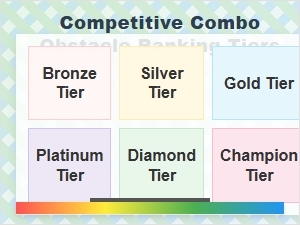 Competitive Combo Obstacle Ranking Tiers
 Competitive Combo Tests and Their Precision Outcomes
 Competitive Endurance Combo Assessment Scenarios
 Analyzing Competitive Combo Test Timing Benchmarks
 The Ultimate Speed Run Achievement Combos for Xbox