You're practicing a difficult combo. You can do it once or twice, but in a real competitive match, you'll need to use it reliably under pressure, many times. That's the entire point of competitive combo endurance assessment scenarios. They aren't about flashy one-offs; they measure whether your practiced technique has the stamina for a real game. It’s the bridge between learning a combo and actually using it to win.
What exactly are these endurance scenarios?
A competitive combo endurance assessment is a structured test that forces you to execute a specific sequence of actions repeatedly and consistently. It’s not just a combo trial. The goal is to simulate the mental and physical fatigue of a long match where you must land that combo to secure rounds, often while managing resources, timing, and opponent pressure.
Think of it like a musician practicing a complex piece not just for accuracy, but for the stamina to perform it flawlessly throughout an entire concert. In gaming, you might be testing a resource-intensive character combo, a precise movement sequence, or a complex build order in a strategy game.
When should you run an endurance assessment?
You should focus on endurance tests when you already know the combo itself. If you've nailed a combo in a controlled trial with clear objectives, the next logical step is to ask: "Can I do this ten times in a row without mistakes? Can I do it when I'm also watching for my opponent's counterplay?" Endurance scenarios answer that.
They are most useful right before entering a serious competitive season or ranked mode. It’s the final quality check on your core tools.
What makes a good endurance test setup?
A good test moves beyond a blank practice space. You introduce variables that mimic real competition.
- Repetition under constraint: Execute the combo 10, 20, or 50 times consecutively. The constraint could be a limited resource pool you must manage between repetitions.
- Added pressure: Perform the combo while also reacting to a simple, automated threat like avoiding incoming projectiles or hitting moving targets.
- Timed intervals: Link your repetitions to strict timing benchmarks. You must start the next combo within a specific window, simulating the pace of a real match.
A practical example: In a fighting game, your endurance scenario might be "Land this five-hit combo 15 times in a row against a defensive AI, while also blocking its random counter-attacks between your attempts." In a strategy game, it could be "Execute this optimal build order to reach a key unit 10 times, with each attempt starting from different, slightly randomized initial conditions."
Common mistakes in endurance testing
People often undermine their own assessments.
- Testing before mastery: Jumping into endurance runs before you can consistently perform the combo once. You build frustration instead of stamina.
- Ignoring context: Doing 50 repetitions in a perfectly empty, static environment. This doesn't translate to a dynamic match.
- No failure criteria: Just "doing it a lot" without clear rules. Define what constitutes a failed attempt (e.g., missing a step, taking too long, wasting excess resources). A good test often includes tracking precision outcomes like success rate percentages.
- Neglecting recovery: Not practicing how you recover after a botched attempt in the sequence. In a real game, you need to reset and try again immediately.
How can you improve your endurance results?
Improvement comes from structured practice, not just repetition.
- Start small: Begin with a low repetition target (like 5). Hit 100% success. Then increase the target by 2 or 3. This gradual scaling builds real confidence.
- Record your attempts: Use simple tools to record your sessions. Watch failures to see if your mistakes are random or follow a pattern (e.g., always missing the third input when tired).
- Mix in distractions: Once comfortable, add light distractions change the background music, practice in a shorter time block, or have a friend call out random numbers. It trains focus.
- Benchmark against real data: Compare your success rates to known community benchmarks or your own past performance. The website Human Benchmark offers simple reaction and memory tests that can indirectly train the cognitive stamina needed for combo endurance.
What are the next steps after an assessment?
After completing a thorough endurance test, you have concrete data. Now you need to apply it.
- If your success rate was low (below 80% for your target reps), return to basic combo trials to fix the weak links before trying another endurance run.
- If your success rate was high, your next step is to integrate the combo into full match simulations or scrimmages. The endurance test proved you have the stamina; now prove you can pick the right moment to use it.
- Update your personal training regimen. Schedule regular, brief endurance assessments for your key combos to prevent skill decay.
Remember, the goal isn't to become a robot that can perform a combo endlessly in a lab. The goal is to build the reliable, in-match stamina that makes your practiced technique a true competitive weapon.
A quick checklist for your next endurance session
- Define the exact combo or sequence.
- Set a clear repetition target (e.g., 15 successful executions).
- Add at least one realistic constraint (resource limit, timing window, or reactive element).
- Decide on your failure criteria (what makes an attempt "invalid").
- Have a method to track your success/failure rate.
- Plan what you'll do after the test based on the results.
 A Method for Evaluating Competitive Combo Trials
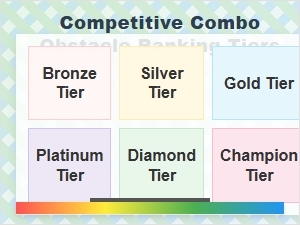 Competitive Combo Obstacle Ranking Tiers
 Competitive Combo Tests and Their Precision Outcomes
 Objective Trials for Ranked Combo Tests
 Analyzing Competitive Combo Test Timing Benchmarks
 The Ultimate Speed Run Achievement Combos for Xbox