You might know your character's combo is good, but can you prove it's better than the other options? Competitive combo trial evaluation methodology is the systematic way to find out. It's not just hitting buttons; it's a structured test to compare different move sequences under realistic conditions. This method helps you pick the strongest, most reliable combo for real matches, giving you a clear edge over guesswork.
What is competitive combo trial evaluation?
It's a controlled testing process for comparing the effectiveness of different character combo sequences in a competitive game mode. You take two or more combos you want to compare, run them against the same set of targets or scenarios, and collect hard data on their performance. The goal is to replace opinions with evidence. For example, you might compare a new, flashy five-hit string against a simpler three-hit bread-and-butter combo to see which actually yields more damage, better control, or higher safety in a real match situation.
Why would I run combo comparison tests?
You run these tests when you need to make a confident choice between combo options. Maybe you're optimizing a main character and debating between two enders, or a patch changed some move properties and you need to re-evaluate your toolkit. The methodology stops you from relying on feel alone. A combo that "seems" powerful might actually have lower damage scaling or leave you more vulnerable than a simpler alternative. These trials give you objective reasons to choose one path over another.
What's the first step in setting up a trial?
The first step is defining your evaluation criteria. What exactly are you trying to measure? Common criteria include:
- Total damage output
- Resource gain (like meter or coins)
- Positional advantage (where you and the opponent end up)
- Execution difficulty and consistency
- Safety if the combo is blocked or missed
You can't compare everything at once. Pick the two or three factors most important to your game plan. A good starting point is our breakdown of the core evaluation methodology, which details how to structure these criteria.
How do I run a practical combo trial?
Once you have your criteria, set up a repeatable test environment. Use the actual competitive game mode, not a relaxed training mode with infinite health. The opponent should be a common character at a standard health value. Run each combo candidate multiple times at least ten repetitions to account for execution variance. Record the results for each run in a simple spreadsheet: damage dealt, meter gained, final screen position, and whether you completed it successfully.
This raw data is your foundation. From it, you can calculate averages and success rates. The combo with the highest average damage and the highest completion rate is usually your winner. But you also need to check the outliers. Does one combo sometimes give wildly high damage but fail half the time? That risk might be unacceptable.
What are the most common mistakes in combo evaluation?
People often test in unrealistic conditions. Testing against a stationary, full-health opponent in a special training mode won't reflect a real match where the opponent is moving, has variable health, and is trying to counter you. Another mistake is testing only once. A combo might work perfectly on your first try but be inconsistent under pressure. You need multiple reps to gauge real reliability.
Ignoring precision challenge outcomes is another error. If your combo requires a very specific starter or spacing, you need to test how often that precise situation actually occurs in your matches. A combo that only works from one exact pixel position is often less valuable than a more forgiving option.
How do I factor in timing and execution?
Speed and timing are critical. A combo that deals 5% more damage but takes twice as long to input might let your opponent recover and retaliate. You should measure the total time from the first hit to the last, and also the input speed required for you personally. Use timing benchmarks from common scenarios to see if your combo finishes before an opponent's invincible reversal becomes available.
If a combo's timing is too tight for you to hit consistently, its theoretical max damage doesn't matter. Your practical evaluation should always weigh execution difficulty against your own skill level. Sometimes, the "second-best" combo on paper is the best combo for you because you can land it every single time.
What should I do with the trial results?
Your results should lead to a clear decision. Choose the combo that best balances high performance with high consistency for your criteria. Then, integrate it into your real gameplay. Practice it specifically, not just the inputs, but also recognizing the situations where you can start it. Finally, revisit your trials after a month of using the combo. Your execution might have improved, or you might have discovered new situations that change its value. Evaluation isn't a one-time event.
For a deeper look at high-level testing frameworks, you can review the combo analysis methods used by some competitive communities.
A quick checklist for your next combo trial
- Define 2-3 specific evaluation criteria (damage, meter, position, etc.).
- Set up tests in the actual competitive game mode.
- Use a realistic opponent character and health value.
- Run each combo candidate at least 10 times.
- Record the raw data for each attempt.
- Compare average results and success rates.
- Factor in execution difficulty and timing constraints.
- Make your choice based on balance, not just peak numbers.
- Practice the chosen combo in real match scenarios.
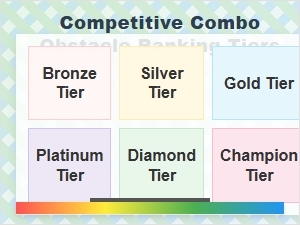 Competitive Combo Obstacle Ranking Tiers
 Competitive Combo Tests and Their Precision Outcomes
 Objective Trials for Ranked Combo Tests
 Competitive Endurance Combo Assessment Scenarios
 Analyzing Competitive Combo Test Timing Benchmarks
 The Ultimate Speed Run Achievement Combos for Xbox