If you've ever watched a competitive gaming match, you've seen those incredible moments where a player pulls off a perfect, lightning-fast combination of moves. That’s not just luck or raw talent. Those moments are built through deliberate practice, and the best players measure that practice with combo test timing benchmarks. This process is about turning a chaotic sequence of inputs into a repeatable, measurable skill.
What Are Combo Test Timing Benchmarks?
Think of a combo test as a specific, isolated sequence of moves you need to perform in a game. Timing benchmarks are the exact speed or rhythm you aim for when performing that sequence. It's the frame-perfect execution that separates a functional combo from a tournament-winning one. For example, in a fighting game, your benchmark might be hitting the first punch within 5 frames of the dash ending, followed by the special move input within 2 frames after the punch lands.
You might look at our guide on frame-level timing theory on Gamasutra for a technical deep dive into how games measure these intervals.
When Do You Need to Test Your Combo Timing?
You use timing benchmarks in two main scenarios: when learning a new character or strategy, and when refining your execution before a major event. If you just learned a new, complex combo route, you'll run timing tests to see if you can do it consistently. Before a tournament, you'll run these same tests to ensure your muscle memory is sharp and your execution isn’t slipping under pressure.
How to Set Up a Useful Timing Test
Don't just practice the combo in a live match. Go into training mode with the opponent set to a fixed state like always blocking or always standing. Record your inputs. The game's input display or a third-party tool will show you the precise timing of each button press. Your goal is to reduce the variation between attempts. If your combo takes 47 frames one time and 52 frames the next, you need to tighten that window.
Our article on a solid combo trial evaluation methodology explains how to structure these practice sessions for clear results.
Common Mistakes When Measuring Combo Speed
The biggest mistake is focusing only on the final damage number, not the timing consistency. You might hit the combo, but if the timing is loose, it will fail against a moving, reacting opponent. Another error is testing against an idle opponent; you should eventually test against an opponent set to random block or tech throws to simulate real pressure.
Also, people often neglect recovery timing the frames after the combo ends where you are vulnerable. A fast combo that leaves you stuck in a bad position isn’t actually optimal. You need to benchmark the entire sequence's safety.
Tips for Improving Your Benchmark Results
Break the combo into segments. Benchmark the timing of the first two moves alone until it’s perfect, then add the next move. Use the game's frame data if available; knowing a move has 7 startup frames tells you exactly when the next input must occur.
Pay close attention to visual and audio cues. Many games have subtle tells for when a hit connects or a move recovers. Use these cues as your rhythm guides instead of just counting mentally.
After establishing your personal timing benchmarks, you can see how they stack up by checking the public obstacle ranking tiers for combos in your game. This shows the community's accepted speed standards for high-level play.
What to Do After You Hit Your Timing Goals
Hitting your benchmark in training mode is step one. Step two is validating it in real scenarios. Play matches where you force yourself to use that combo. Record those matches and review if the timing held up under stress. Did you get the combo during a real opponent’s blockstring? Did it work when you were at low health?
Finally, compare your successful executions to the recorded outcomes from precision challenges others have completed. This helps you understand if your benchmark is truly competitive or if there’s a more efficient route you haven’t considered.
A Quick Checklist for Your Next Session
- Go into training mode and pick one combo to isolate.
- Turn on input display recording.
- Perform the combo 10 times, focusing only on timing.
- Note the fastest, slowest, and average frame count for the full sequence.
- Identify the segment with the most timing variance and drill it 20 times alone.
- Test the combo against an opponent set to "random counter" or "auto-block."
- Run the combo in at least three live matches tonight and note its success rate.
 A Method for Evaluating Competitive Combo Trials
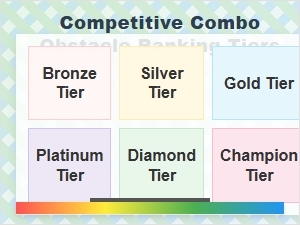 Competitive Combo Obstacle Ranking Tiers
 Competitive Combo Tests and Their Precision Outcomes
 Objective Trials for Ranked Combo Tests
 Competitive Endurance Combo Assessment Scenarios
 The Ultimate Speed Run Achievement Combos for Xbox