Getting your combos right in a competitive game is about more than just looking cool. It's about winning. Competitive combo precision challenge outcomes are the final, measurable results of your ability to execute complex sequences under pressure. They tell you, and your opponents, exactly how effective your execution is in a real match. This matters because a missed input or a mistimed link can turn a potential victory into a loss. Understanding these outcomes helps you move from practicing combos in a safe environment to landing them reliably when it counts.
What exactly are combo precision challenge outcomes?
A "competitive combo precision challenge" is a structured test, often in a special game mode, that measures how accurately you perform a specific combo chain. The outcome is the data you get from that test. It might be a score, a success rate percentage, a clear time, or a damage efficiency rating. Think of it as a performance report for your technical skill. Instead of just saying "I practiced that combo," you can say "I hit that 10-hit combo with 95% accuracy under tournament-style pressure settings." This shifts practice from feeling-based to evidence-based.
Why would I care about measuring my combo outcomes?
You care when you want to improve objectively. If you're stuck at a certain rank, inconsistent combo execution is often a hidden culprit. Measuring outcomes helps you pinpoint the weak link in your sequence. For example, you might find your combo trial evaluation shows a high failure rate on the third move of a string. That tells you to stop practicing the whole combo blindly and focus drills on that specific transition. It also helps you set realistic goals. Aiming for a "100% success rate" is vague; aiming for "improving my precision score from 78 to 90 on the advanced trial" is concrete and trackable.
How do I set up a good combo precision test?
Many games have built-in challenge modes or training tools that record success rates. If your game doesn't, you can create your own test. Define the exact combo, the starting conditions, and what constitutes a success or failure. Run it multiple times say, 50 attempts and record your results. Using a structured competitive combo trial evaluation methodology makes this process systematic and repeatable, so you can compare your results week to week.
What are common mistakes when analyzing these outcomes?
The biggest mistake is only looking at the final score and ignoring the details. A 80% success rate might hide that you fail every time when starting from a specific side of the stage. Another mistake is testing under unrealistic conditions. Practicing a combo with full resources is different than executing it with low health and under a tight time limit, which is more like a real match. You also shouldn't ignore mental fatigue. Your precision outcomes might drop significantly after 20 minutes of intense play, which is vital knowledge for tournament preparation. Our guide on competitive combo endurance assessment scenarios covers how to test for this.
Can a high precision score still lead to losing matches?
Yes, absolutely. Precision outcomes measure execution, not decision-making. You might perfectly perform a high-damage combo in a challenge mode, but in a real match, you might choose to use it in a situation where a simpler, safer combo would guarantee the win. Over-committing to a complex combo when a basic one would suffice is a tactical error. The challenge outcome proves you can do it; your game sense decides if you should do it right now.
How do I use outcome data to actually get better?
First, identify your bottleneck. Is it a specific input? Is it timing a cancel window? Is it doing the combo from an awkward position? Focus your daily practice on that single element. Second, compare your outcome data against known benchmarks. Many communities establish competitive combo obstacle ranking tiers that show what precision scores are typical for different skill levels. This helps you see if you're meeting the standard for your target rank. Third, introduce variables. Once you master a combo in a static test, add pressure. Have a friend distract you, or set a strict time limit, and run the test again. See how your outcomes change.
What's a real next step I can take today?
Pick one combo that is important for your main character or strategy. Run a formal precision challenge: 50 attempts, strict success/failure criteria, and record your score. Don't just guess. Write down the number. Then, look for patterns in your failures. Was there a common point where you dropped it? Spend 15 minutes practicing only that troublesome link. Tomorrow, run the 50-attempt test again and compare the outcomes. This cycle of measurement, focused practice, and re-measurement is how you turn vague improvement into documented progress. For a deeper look at professional testing frameworks, you can review this external resource on scientific training methods for gamers.
A simple checklist for using combo precision outcomes
- Choose one combo to evaluate, not your entire move list.
- Define clear pass/fail rules for your challenge.
- Run a set number of attempts (like 50) and record the raw success rate.
- Note any patterns: Do you fail more from the left side? After a specific move?
- Compare your score to community tier benchmarks if available.
- Focus your next practice session solely on the weakest link you identified.
- Re-test after focused practice to see if your outcomes improved.
 A Method for Evaluating Competitive Combo Trials
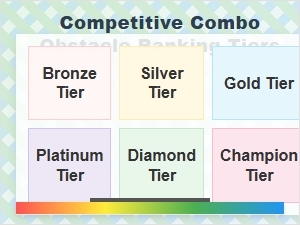 Competitive Combo Obstacle Ranking Tiers
 Objective Trials for Ranked Combo Tests
 Competitive Endurance Combo Assessment Scenarios
 Analyzing Competitive Combo Test Timing Benchmarks
 The Ultimate Speed Run Achievement Combos for Xbox